Last date for filing ACTIVE Form INC 22A is 25th April 2019
Request you to kindly update photographs of registered office along with one Director with longitude and latitude of exact address.
Penalty after 25th April – 10000/-

Last date for filing ACTIVE Form INC 22A is 25th April 2019
Request you to kindly update photographs of registered office along with one Director with longitude and latitude of exact address.
Penalty after 25th April – 10000/-
Limited Liability Partnerships (LLPs) offer a form of business organization that combines the flexibility of a partnership with the limited liability protection normally associated with corporations. Understanding the extent to which partners in an LLP are liable is crucial for anyone considering this business structure. Below is a step-by-step guide that outlines the key aspects of partners’ liability in an LLP.
Limited liability means that the partners’ personal assets are mostly protected if the LLP faces bankruptcy or legal actions. Partners are not personally responsible for the debts incurred by the LLP beyond their investment in the business. However, it’s essential to understand that this protection is not absolute.
While limited liability is a significant benefit, there are exceptions. For instance, if a partner guarantees a loan for the LLP, they could be liable for the full amount if the LLP defaults. Partners could also be liable if found guilty of wrongful actions or negligence performed in the course of business activities.
In many LLPs, there are different roles which might include:
Understand the type of partnership agreement you are entering into and the implications it has on your liability.
The LLP Agreement is a legal document that specifies the rights and responsibilities of each partner. It will also outline how liability is distributed among the partners. Ensure you read and understand this document, as it will be key in determining your personal risk.
Many LLPs obtain professional liability insurance or errors and omissions insurance to protect against potential claims. Insurance can provide an extra layer of security for the partners’ personal assets. Assess the types and levels of insurance that may be appropriate for your LLP.
In some jurisdictions, LLP partners may be subject to joint and several liability for the actions of other partners. This means a single partner could be held responsible for the full amount of a debt or liability, with the right to seek contribution from the other partners later.
LLPs typically offer pass-through taxation, where the profits and losses pass through to the individual partners. However, tax liability will depend on the income and losses of the LLP and the individual tax circumstances of the partners. Consult with a tax advisor to understand the implications fully.
LLP laws can vary significantly by jurisdiction. It’s imperative to understand how your state governs LLPs, as this will impact your liability. Consult with a local attorney who specializes in business law to gain clarity on your state’s specific rules and regulations.
As a partner in an LLP, it’s your responsibility to stay informed about the business’s activities, ensuring that it remains compliant with all relevant laws and regulations. Regularly review the LLP’s financials and legal standing to help minimize your risk exposure.
Before forming an LLP or if you ever have concerns about your liability as a partner, it is wise to seek professional legal advice. An experienced attorney can provide guidance specific to your situation and help you to navigate the complexities of partners’ liability within an LLP.
Understanding and managing your liability as a partner in an LLP is critical to protecting your interests and ensuring the long-term success of the business. Regular consultation with legal and financial advisors will help you to maintain this balance effectively.
Foreign Companies Setting up Branch Office(BO), Project Office (PO) and Liaison Office (LO) in India is required to make application to AD category Banks through which it wishes to peruse Banking Operations
Eligibility Criteria for Setting up Branch Office / Project Office or Liaison Office in India
Note:
An applicant that is not financially sound and is a subsidiary of another company may submit a Letter of Comfort (LOC) (Annex A) from its parent/ group company, subject to the condition that the parent/ group company satisfies the prescribed criteria for net worth and profit.
Net worth :
Net Worth [total of paid-up capital and free reserves, less intangible assets as per the latest Audited Balance Sheet or Account Statement certified by a Certified Public Accountant or any Registered Accounts Practitioner by whatever name called].
Cases in Which RBI Approval is required for Setting up Branch Office(BO), Project Office (PO) and Liaison Office (LO) in India
Procedure for making Application to AD-Category Bank for Setting up Branch Office(BO), Project Office (PO) and Liaison Office (LO) in India
If the Applicant Company fulfills the above mentioned eligibility Criteria , the Application can be made to AD category Bank through which applicant company wishes to peruse Banking Relations
The AD Category-I bank shall after exercising due diligence in respect of the applicant’s background, and satisfying itself as regards adherence to the eligibility criteria for establishing BO/LO/PO, antecedents of the promoter, nature and location of activity of the applicant, sources of funds, etc., and compliance with the extant KYC norms grant approval to the foreign entity for establishing BO/LO/PO in India. The AD Category-I banks may frame appropriate policy for dealing with these applications in conformity with the FEMA Regulations and Directions, However RBI will issue LIN to every BO/LO.
The validity period of an LO is generally for three years, except in the case of Non-Banking Finance Companies (NBFCs) and those entities engaged in construction and development sectors, for whom the validity period is two years only. The validity period of the project office is for the tenure of the project.
Once applicant that has received a permission for setting up of a BO/LO/PO shall inform the designated AD Category I bank as to the date on which the BO/LO/PO has been set up. The AD Category I bank in turn shall inform Reserve Bank accordingly. In case an approval granted by the AD bank has either been surrendered by the applicant or has expired without any BO/LO/PO being set up, the AD Category I bank shall inform RBI accordingly.
🛡️ Overview: Are you looking to venture into the booming security services industry in Rajasthan? Here’s a golden opportunity! We are excited to present a ready-made Security Company with a valid PSARA (Private Security Agencies Regulation Act) License for sale. This well-established business is equipped to meet the increasing demand for top-notch security services in the region.
🔒 Key Features:
✅ PSARA License:
✅ Established Client Base:
✅ Trained Personnel:
✅ Operational Infrastructure:
✅ Proven Track Record:
✅ Location Advantage:
📈 Potential for Growth:
📑 Transaction Details:
💼 Reason for Sale:
📞 Contact Information:
Don’t miss out on this excellent opportunity to acquire a well-established security company with a PSARA License in Rajasthan. Secure your future in the thriving security services industry! 🚀
राजस्थान में पार्टनरशिप फर्म पंजीकरण आवश्यक है जहां दो या दो से अधिक व्यक्ति साझेदारी में व्यापार कर रहे हैं, एक साझेदारी फर्म व्यापार संरचना का एक पारंपरिक और सबसे अधिक इस्तेमाल किया जाने वाला रूप है।
भारत में, एक साझेदारी फर्म भारतीय भागीदारी अधिनियम, 1932 द्वारा शासित होती है। एक साझेदारी को भारतीय भागीदारी अधिनियम 1932 की धारा 4 के अनुसार परिभाषित किया गया है, यह उन व्यक्तियों के बीच का संबंध है, जो सभी या किसी के द्वारा किए गए व्यवसाय के लाभ को साझा करने के लिए सहमत हुए हैं। उनमें से सभी के लिए अभिनय।
A पार्टनरशिप डीड फर्म के भागीदारों के बीच एक लिखित समझौता है, पार्टनरशिप डीड में पार्टनरशिप फर्म के व्यवसाय के संबंध में सभी नियमों और शर्तों का उल्लेख है, सभी व्यावसायिक गतिविधियों को पार्टनरशिप डीड में उल्लिखित लिखित शर्तों के आधार पर किया जाता है पार्टनरशिप डीड में
महत्वपूर्ण बिंदु: का
MCA has extended Last Date for Filing Form CRA-4 (Cost Audit Report ) for FY 2018-19 Extended to 31st December, 2019 due to development of Costing Taxonomy 2019, the companies that are required to file Cost Audit Report in CRA-4 are required to use Latest Taxonomy that is under process of development.
However those companies who have already filed form CRA-4 are not required to file fresh form.
Digital marketing is an increasingly important part of any successful business. It is a way to reach a wider audience, increase brand awareness and cultivate customer loyalty. It can also be used to drive sales and revenue. With digital marketing strategies, businesses can reach potential customers in new and innovative ways. It is a great way to differentiate yourself from the competition and reach people who are more likely to purchase your product or service. Digital marketing can be as simple as creating a website, launching a social media campaign, or creating an email marketing campaign. With the right planning and execution, digital marketing can be an effective way to reach your target audience and increase your business’s success. Here we will discuss the Top Ten Digital Marketing Strategies for New Businesses
A digital marketing plan is a must-have for any new business. It should include the objectives, strategies, tactics and timelines for all of your online activities.
Social media is one of the most effective ways to reach out to potential customers and engage with them on a personal level. Make sure to set up a business page on major social media platforms, such as Facebook, Twitter, Instagram, and Pinterest.
Content is king when it comes to digital marketing. You need to create content that is engaging, informative, and entertaining in order to capture the attention of your target audience.
SEO stands for search engine optimization. It’s a set of strategies and tactics used to increase your website’s visibility in search engine results pages. If you want to get more organic traffic, you need to make sure your website is optimized for SEO.
Paid advertising can be a great way to reach new customers and get your message out quickly. You can use platforms like Google Ads, Facebook Ads, and Instagram Ads to reach new audiences.
Email marketing is a great way to stay in touch with your existing customers and reach out to potential customers. Make sure to create newsletters, promotional emails, and other types of emails to stay top of mind.
Video is one of the most powerful tools for digital marketing. You can use video to tell your story, explain your product, and engage with your audience.
It’s important to track your results and analyze the data to see what’s working and what’s not. This will allow you to make adjustments to your digital marketing strategy and ensure you’re getting the most out of your efforts.
Influencer marketing is a great way to leverage the power of social media influencers to reach more people and build your brand.
Mobile is one of the most important channels for digital marketing. Make sure your website and content are optimized for mobile devices so you can reach as many people as possible.
PWD Contractor Licence is mandatory required to be obtained before applying for any Tender in Rajasthan for PWD Contractor work. Every person who is planning to apply for tender for government works must obtain a contractor’s license with PWD.
The contractor must have Firm Registered, a Firm can be a proprietorship firm, company, Partnership or LLP ( you can choose any type of business entity) ( For Firm Registration with Fastlegal call 9782280098 or email: mail@fastlegal.in )
Your Firm must have GST Registration ( for GST Registration call 9782280098 or email: mail@fastlegal.in)
Application form for Registration: The application Form for Contractor Enlistment is required to be obtained from the Department with payment of Rs. 50
S. No. | Class of contractors | Extent upto which qualified to tender for any, work |
| 1 | AA class | Any amount |
| 2 | A Class | Upto Rs. 10.00 crores |
| 3. | B Class | Upto Rs. 5.00 crores |
| 4. | C Class | Upto Rs. 1.50 crores |
| 5. | D Class | Upto Rs. 30 Lacs |
Class of contractors | Amount of Registration Fee in Cash/Treasury Challan/Bank Demand Draft (Non-refundable) | Amount of Security Depositin form of Interest bearingDeposit/FDR of Bank |
| ClassAA | Rs. 45,000.00 | 12 Lakh |
| Class A | Rs. 33750.00 | 6 Lakh |
| Class B | Rs. 22500.00 | 3 Lakh |
| Class C | Rs. 9000.00 | 1.5 Lakh |
| Class D | Rs. 4500.00 | 75 Thousand |
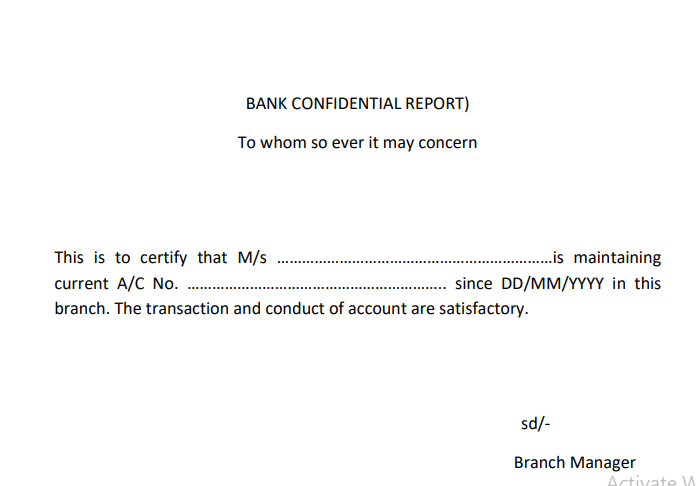
Bank Confidential Report Format :
In this article, we will discuss the filing of Donation Return in Form 10BD, Form 10BD ( Donation Return) is required to be filed by every NGO registered under Section 80G of the Income Tax Act, where Donors get tax deductions on the basis of donations made by them to such registered insitituions. In the Amendments made in the Finance Act, the government has made it mandatory filing for such institutions to file Donation returns on or before 31st may, Late filing will attract a fee of Rs. 200 per day.

Following Information of Donar is required for the Filing of Donation form on the Income Tax Portal:
Once the Return in Form 10BD is submitted, the Certificate in Form 10BE will be available for download on Income Tax Portal. NGO is required to give such certificates to Donors to enable them to claim 80G exemption.
GST Return filing is mandatory for every GST Registered person , Filing of GST Return is main part to carry on business in smooth manner and to avoid non filing penalties. Non Filing of GST Return will make you Non compliant and you have to pay high penalties of Rs. 50 per day for per month return.
Here we will discuss about the present Return that every GST Dealer should file :
GSTR3B Return contains all the information regarding Taxable and Exempted Supplied made and received by the dealer during the filing period. Like if any taxpayer has to file GSTR 3B Return , He has to fill all the amount of
GSTR 3B is very Important return that is required to be filed by every month before 20th of the Next month , Due date for November , 2019 will be 20th December, 2019
Late Filing Fee : Rs. 50 per day or Rs. 20 per day for NIL return.
GSTR 1 is Return for outward Supplies made by Registered Person, GSTR1 is both monthly and Quarterly return depending upon the turnover of the previous year period.
Following information is required to be filed in GSTR 1 Return :
File GST Return with Fastlegal – Call us at 9782280098 Place your request here