As per recent Amendment in Nidhi Rules, every Company is required to file Form NDH-4 to ROC , This form is an Application for Declaration of Company as Nidhi Company and Nidhi Company name will be Published in Official Gazette..
Following Information is required for Filing of form NDH-4
Equity Paidup Capital as on Date of Application
MOA of Company
Whether the company has carried out any financial dealings with any person other than its members ? Yes /NO
Whether the company has complied with the Nidhi Rules, 2014 ? Filing of all Returns , 10 % of Term Deposit Details
*Number of branches opened by the company and places where opened along with dates of opening- if Yes, Details thereof – Name of Branch, Place of Branch and Date of opening
The ratio of net owned funds to deposits accepted- Deposits/Net owned Funds
*Is the ratio of loan on immovable property within the prescribed limit, YES/No
Board Resolution for support of Above
Certificate Signed by Two Directors of the Company regarding the number of members as on date of application (Members should not be less than 200)
Certificate from the auditors of the company to the effect that the company has complied with the Nidhi Rules, 2014
Please Note that for new Every New Nidhi Companies , this form is required to be filed within 1 years from that Date of Incorporation.
When it comes to running a successful business, understanding your finances is key. In this guide, we’ll break down the world of bookkeeping and accounting for private limited companies in simple terms. Whether you’re a business owner or just curious about managing money, this guide is here to make financial jargon easy to grasp.
Benefits of Effective Bookkeeping and Accounting:
See Where Your Money Goes:
Keep track of your income and expenses to understand where your money is coming from and where it’s going.
Stay Out of Legal Trouble:
Make sure you follow the rules! Good bookkeeping helps you meet legal requirements, keeping your business out of hot water.
Plan for the Future:
Create realistic plans for your business’s future by having a clear picture of your finances. Know where you stand and where you want to go.
Make Smarter Choices:
Access timely and accurate financial info to make smart decisions. It’s like having a map for your business journey.
Avoid Nasty Surprises:
Catch potential money problems early. Good bookkeeping helps you spot and fix issues before they become big headaches.
Keep the Money Flowing:
Manage your cash flow like a pro. Ensure you always have enough money to keep your business running smoothly.
Pay Less in Taxes:
Pay the right amount of taxes—no more, no less. Smart tax planning can save you money.
The Bookkeeping and Accounting Process:
Write It Down:
Keep a record of all your money moves—what comes in and what goes out.
Sort Things Out:
Put your money moves into categories so you can easily see where your cash is going.
Check Your Bank:
Make sure your records match what’s in your bank account. It’s like balancing your checkbook.
Get Your Reports:
Look at your financial reports, like a report card for your business. Understand your income, what you own, and what you owe.
Keep a Trail:
Keep a record of changes in case you need to look back. It’s like keeping receipts for everything you do.
Services Provided by Accounting Professionals:
Money Recording Experts:
Let pros handle the details. They make sure every penny is accounted for.
Report Wizards:
Get easy-to-read reports from the experts. Understand your finances without headaches.
Tax Helpers:
Tax time doesn’t have to be scary. Let the pros guide you and make sure you’re not paying too much.
Audit Support Friends:
If the tax people come knocking, don’t worry. The pros will help you through it.
Money Advice Gurus:
Get advice on making smart money moves. The pros are your financial sidekicks.
Conclusion: In a nutshell, good bookkeeping and accounting are your business BFFs. They help you understand your money, avoid problems, and plan for a successful future. Think of it as your business’s roadmap to financial success—easy to follow and full of benefits.
Ministry of Corporate Affairs extended date of filing form active INC 22A to 15th June 2019 for the companies which are registered on or before 31st December 2017
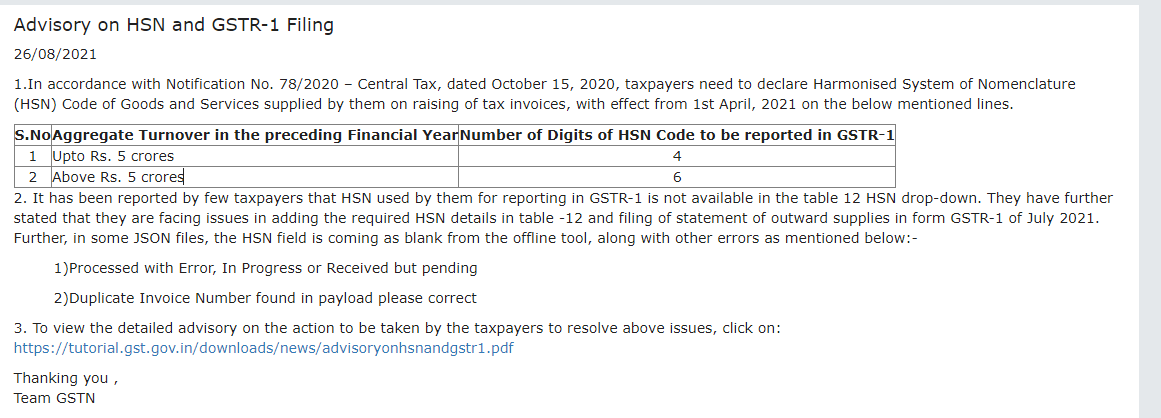
In accordance with Notification No. 78/2020 – Central Tax, dated October 15, 2020, taxpayers need to declare Harmonised System of Nomenclature (HSN) Code of Goods and Services supplied by them on raising of tax invoices, with effect from 1st April, 2021 on the below mentioned lines in GSTR-1 return (HSN Code In GSTR-1 Return)
S.No
Aggregate Turnover in the preceding Financial Year
Number of Digits of HSN Code to be reported in GSTR-1
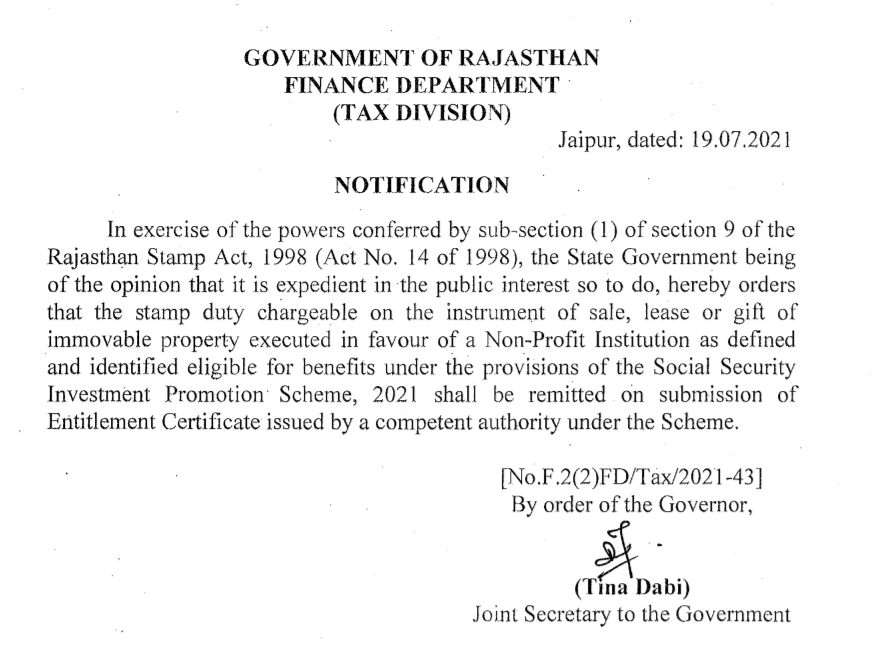
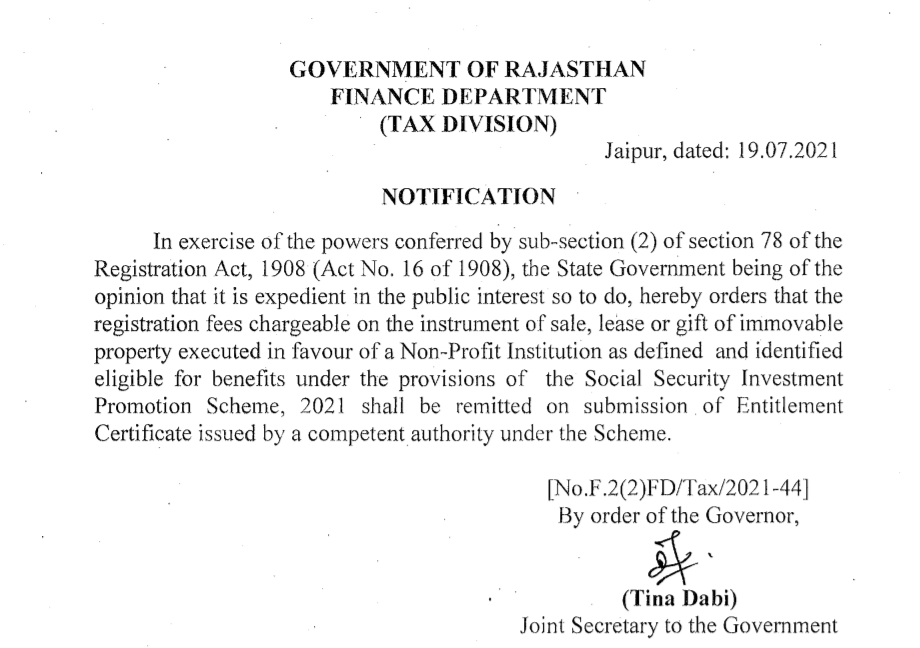
To Promote Social Investment in the state of Rajasthan Rajasthan Government on 19th July 2021 issued notification regarding exemption from Stamp Duty and Registration fee chargeable on the instrument of sale, lease or gift of immovable property executed in favour of a Non-Profit Institution. There are two separate Notifications for Stamp Duty and Registration Fee exemption to NGO, Only those institutions which Obtain Entitlement Certificate from Government will be exempted under this notification.
Link of Notification for Exemption in the Registration fee – Download
Link of Notification for exemption in the Stamp Duty – Download
Procedure to get Stamp Duty and Registration fee Exemption
Non Profit Institutions wants to get exemption from the above notification are required to obtain Entitlement Certificate online from Rajasthan Government, to get approval non-profit institution must already be registered as Trust, Society or Section 8 Company (NGO)
Documents required to apply for Entitlement certificate for Exemption
Institution Reg. & Latest Renewal Certificate/ संस्था के पंजीकरण & अंतिम नवीकरण प्रमाणपत्र
Audited certificate of the CA of the a/cs of the institution for last three FY/ पिछले तीन वित्त वर्ष के लिए संस्था के खातों के सीए का ऑडिटेड प्रमाण पत्र
Details of current Executive/ Governing body of the Institution and Bye-laws/ संस्थान और उप-कानूनों की वर्तमान कार्यकारी / शासी निकाय का विवरण
Annual Report of last three FY/ पिछले तीन वित्तीय वर्ष की वार्षिक रिपोर्ट
Buyer-Seller Agreement
Documents relating to immovable property in the name of the institution (only for Exemption under S.No. 1 to 6)/ संस्था के नाम पर अचल संपत्ति से संबंधित दस्तावेज (केवल क्र.स. 1 से 6 के तहत छूट के लिए)
Copy of documents of land (only for Exemption S.No. 1-6)/ भूमि के दस्तावेजों की प्रतिलिपि (केवल क्र.स. 1-6 के तहत छूट के लिए)
Bank Account Details
Details of the Work being done for the Disadvantaged Class/ Section/ वंचित वर्ग/ तबका के लिये किये जा रहे कार्यो का ब्यौरा
Depreciation is an accounting method of allocating the cost of a tangible asset over its useful life. In this tutorial, we’ll explore how to calculate depreciation under the Companies Act and the Income Tax Act. We’ll also discuss the procedure for calculating deferred tax related to fixed assets.
Depreciation Under Companies Act
The depreciation under the Companies Act is calculated based on the useful life of the assets, as stated in Schedule II of the Companies Act, 2013.
Here’s a simplified step-by-step process:
Identify the Asset: Determine the fixed asset that you will depreciate.
Determine the Cost: Ascertain the historical cost of the asset, including purchase price, import duties, transportation, and installation.
Assess the Useful Life: Refer to Schedule II for the prescribed useful life of the asset class.
Select the Method: Choose a depreciation method (Straight line method or Written down value method) as per your company policy.
Calculate Depreciation: Apply the method to the cost of the asset over its useful life.
Example Table of Rates and Useful Life as per Companies Act:
Asset Type
Useful Life (Years)
Depreciation Rate (SLM)
Depreciation Rate (WDV)
Buildings
30
3.34%
5.28%
Furniture
10
9.50%
18.10%
Machinery
15
6.33%
13.91%
Computers
3
31.67%
63.16%
Note: SLM stands for Straight Line Method, and WDV stands for Written Down Value Method.
Depreciation Under Income Tax Act
The Income Tax Act allows businesses to claim depreciation on their assets to reduce their taxable income using the Written Down Value (WDV) method.
Steps for calculation under Income Tax Act:
Categorize the Asset: Identify the block of asset as per Income Tax rules.
Determine the WDV: Find out the Written Down Value at the beginning of the year.
Apply the Rates: Use the rates provided by the Income Tax Act for different asset types.
Compute Depreciation: Calculate the depreciation for the year based on the applicable rate.
Example Table of Rates as per Income Tax Act:
Asset Block
Depreciation Rate
Building
10%
Furniture and Fittings
10%
Machinery and Plant (General)
15%
Computers and Software
40%
Calculating Deferred Tax
Deferred tax is calculated on temporary differences between the book value of assets as per accounting records and their value for tax purposes.
Here’s how to calculate deferred tax:
Identify Temporary Differences: Determine the temporary differences that arise due to differences in depreciation methods or rates as per accounting standards and tax laws.
Calculate Timing Differences: Assess the timing difference for the period by subtracting the tax base of the asset from its carrying amount.
Apply the Tax Rate: Apply the current tax rate to the timing difference to find the deferred tax.
Deferred Tax Asset or Liability: If the carrying amount is greater than the tax base, it results in a deferred tax asset. Conversely, if the tax base is greater, it leads to a deferred tax liability.
Example Calculation:
Particulars
Carrying Amount
Tax Base
Temporary Difference
Tax Rate
Deferred Tax
Machinery (as per books)
100,000
80,000
20,000
30%
6,000
In this example, a deferred tax liability of Rs. 6,000 will be recognized on the balance sheet because the carrying amount is more than the tax base.
Remember that rules and rates are subject to change, and different types of assets may have specific requirements. It’s important to refer to the latest schedules and rates provided under the Companies Act and Income Tax Act respectively, and to consult with a tax professional for accurate depreciation and deferred tax calculations.
Starting a new business needs some decision making at a very initial stage. But they have bearing on the overall success of the business. The first question we need to answer is to choose the Business setup. There are various options. Indian law provides many options for a business set up. It contains a small business entity like a proprietor and can go to a complex one like a public limited company or further a listed company.
In this article you will understand all these setups.
Different Types of Business Setup to Choose
1. Proprietorship
a). How to set up a proprietorship?
It is the simplest form of business setup. There is no need to apply for a separate PAN for starting a business as an individual. You can have different names for the business. No extra compliances are required.
b). How the income of a proprietor will be taxed in income tax?
The income of a proprietor is taxed on the normal tax rates of an individual. The income is shown in the income tax return of the proprietor as an income from business or profession. The tax rates of individuals are applicable on a proprietorship business.
2. HUF
a). How to set up an HUF?
A HUF is automatically formed at the time of marriage & includes women such as wives & unmarried persons/daughters. There must be one common ancestor to continue the lineage/descendants. Gifts, wills, property sale or inheritance are all collectively shared as assets & so not repeatedly subject to tax.
Upon being established, a HUF needs to be officially registered in its name. It should have a legal deed, containing details of members and the business nature of the HUF. A PAN number and bank account should be opened in the name of the HUF.
b). How to tax income of an HUF?
A Hindu Undivided family unit can save taxes by creating & pooling in assets to form an overall entity. This is taxed separately from its individual members.Hindus, Buddhists, Jains, and Sikhs can also form a HUF. This unit has its own PAN and files tax returns independently of its members.
The main advantage of this is that each family member can claim their own respective exemption as a deduction or tax rebate. Additionally, insurance can be undertaken for the entire family unit, whilst internal functional member salaries can be disbursed & later deducted from the total income (treated as an expense). Investment returns are again taxable overall, however HUF tax rates are the same as for individuals. This saves money for the family.
3. Partnership firm
a). How to set up a partnership firm?
A formal partnership deed on a stamp paper is required. The names of all partners and their details should be there in the deed. The object clause is required in partnership deed. The manner of sharing the profits , salary of partners and capital contribution is also covered in partnership deeds.
b). How to tax income of a partnership firm?
There is a separate tax rate to tax the income of a partnership. Their tax incidence is highest in comparison to all other forms of business. They don’t get any minimum exemption like the individual and huf.
An LLP can be set up fairly easily. All that’s required is a minimum of 2 or more assigned partners, their respective documents, including PAN & address proof, such as Aadhar, Driving license, etc. Furthermore, a photo of each participant & credentials pertaining to the property where the business will be based or conducted. These could be a rent agreement, tax receipt/ownership deed or latest utility bill. The same also applies in the case of partnerships with foreign nationals (using their documents from abroad).
b). How to tax income of an LLP?
This is simple & tax is levied at a flat rate of 30% on all income under Rs. 1 Cr, beyond which an additional 10% surcharge is applied over the total amount. Method of payment include downloading & filling a physical challan document (ITNS 280), subsequently making the payment at a designated bank branch. Alternatively, one can pay online via the e-pay portal.
5. OPC
a). How to set up an OPC?
A One Person Company (OPC) can be established with just 1 director & member (totalling a minimum of 2 people overall). This is as per Section 2(62) of the Company’s Act 2013. Firstly, one needs to apply for a Digital Signature Certificate (DSC) of the intended director. This requires an Aadhar & PAN card (both for ID, address proof & tax purposes), photo, email address & phone number.
Upon receiving the DSC, one needs to apply for the Director Identification Number (DIN) for the proposed Director using the SPICe form. This should be accompanied by the name and the address proof of the director. For existing companies, form DIR-3 is required. Since January 2018, the applicant doesn’t need to file this separately. The DIN can now be applied within the SPICe form for up to three directors.
Now the name of the company needs submitting & approval. This needs to be in the form of “ABC (OPC) Private Limited”. There are 2 avenues in applying for this: either using form SPICe 32 or the RUN web service by MCA (by submitting 1 name & the justification of this). Since 23/3/2018 though, the Ministry of Finance has permitted 2 proposed names & 1 resubmission (RSUB), whilst reserving unique names for unique names (RUN service) for companies.
Upon approval by the MCA, one can progress further.
The following documents need preparing to be submitted to the ROC (Registrar of Companies):
The Memorandum of Association (MoA) which are the objects to be followed by the Company or state the business purpose for which the company will be incorporated
The Articles of the Association (AoA) which stipulates the operating company by-laws
As there’s only 1 Director and a member, a representative nominee needs to be appointed. In the event that they become incapacitated or dies & is unable to perform their duties, the nominee will act on the director’s behalf. Consent will be acquired in Form INC – 3, along with their PAN & Aadhar Card
Proof of the proposed company’s registered office, plus ownership and a NOC from the owner is also required. Furthermore, affidavit & consent from the proposed director on form INC -9 & DIR–2, respectively. Finally, a declaration by the professional which certifies that all regulations are fulfilled.
No coming onto the filing of forms with the MCA. All documents will be attached to the SPICe form series along with the DSC of the director & member. These will then be uploaded to their site for approval. Upon uploading, forms 49A & B will be generated for the PAN & TAN of the company. These need to be sent to the MCA as well.
Lastly, upon verification, the ROC will issue a certificate of incorporation, ready for initiating business operations.
b). How to tax income of an OPC?
This is simple: it’s merely applied at a flat rate of 30%.
6. Private company
a). How to set up a private company?
Upon finalising & deciding a name for the company:
#1: Apply for DSC (Digital Signature Certificate)
#2: Apply for the DIN (Director Identification Number)
#3: Check for the proposed name availability & secure it
#4: File the EMoa and EAOA to register the private limited company name
#5: Apply for both the PAN and TAN of the company
#6: Certificate of incorporation will be issued by RoC, along with PAN & TAN
#7: Open a current bank account using the company name
b). How to tax income of a private company?
This is levied at a rate of 25% plus surcharge of 7% if the total income exceeds Rs. 1 Cr but less than 10 Cr. Above 10Cr, the surcharge increases to 12%. The overall rate increases to 30% if the annual turnover exceeds 250 Cr.
7. Public company
a). How to set up a public company?
The requirements for registration of Public Limited Companies (PLC) are similar to those of establishing an OPC, with a few differences – yet it remains simple. There are a multitude of rules and regulations set under the Companies Act, 2013 for this. Aspects to consider during this process include:
A minimum of 7 shareholders & 3 directors are needed to form a PLC
A share capital of at least Rs. 5 lakhs is required
A Digital Signature Certificate (DSC) of one of the directors is needed for submission
Self-attested copies of identity and address proof
The intended directors of the company will need a DIN
An application is warranted for selecting the company name
The main object clause of the company must be mentioned, stating what a company will do after its incorporation. The application needs to be submitted to the ROC along with the required documents like MOA, AOA, filled forms DIR – 12, INC – 7 & 22. These need to be accompanied by the applicable registration fees. Upon obtaining an approval from the ROC, the company can apply for the ‘certificate of business commencement.’
Documents required for incorporating a PLC:
Proof of identity & address plus PAN number of all the shareholders and directors
Utility Bill of the proposed registered company office location
NOC from the landlord/leaseholder where the company office intends to be situated
DIN & DSC of all the directors
Memorandum & Articles of Association (MOA) & (AOA)
b). How to tax income of a public company?
This is levied at a rate of 30% plus surcharge of 5% if the total income exceeds Rs. 1 Cr. Additionally, 3% Education cess & Secondary and Higher Education cess on the total of the income tax & surcharge.
8. Listed company
a). How to get a company listed?
Firstly, the issuer should be a company incorporated under the Companies Act 1956 / 2013 in India. Secondly, the post issue paid up capital of the company (face value) shouldn’t exceed Rs. 25 crore. A track record of at least three years of either:
i. the applicant seeking listing; or
ii. the promoters (holding a minimum of 3 years of relevant experience & holding at least 20% share of post issue equity capital share, collectively or individually) or a promoting company, established in or outside India or
iii.Proprietor/Partnership firm which subsequently converted into a company (however not in established as such for three years), then approaches the exchange for listing
The company/entity should have an operating profit (earnings excluding interest, depreciation and tax) from operations for a minimum of any 2 out of 3 financial years preceding the application and its net worth should be in the positive balance.
It’s also imperative that the applicant company has not been referred to a former board for Industrial and Financial Reconstruction (BIFR). Furthermore, no action should have been taken under the Insolvency and Bankruptcy Code against the issuer and promoting companies.
Lastly, the company shouldn’t have received any winding up petition admitted by a NCLT or court. No material regulatory/disciplinary action by a stock exchange or regulatory body should be recorded in the previous three years against the applicant company.
b). How to tax income of a listed company?
This is also referred to as corporation tax. It is set at 25% for annual turnovers of less than (& including Rs. 250 Cr) & 30% above this. A 5% surcharge is levied on any amount exceeding 1 Cr, irrespective of the total amount.
About Author
CA Shaifaly Girdharwal
CA Shaifaly Girdharwal is a qualified chartered accountant practicing in GST. She is the co-founder of www.consultease.com and a famous YouTuber with more than 2,40,000 subscribers for her channel dedicated to the GST videos. She is also a trainer and author. She is a trainer at https://www.consultease.com/courses/.
Loan Agreement is an instrument and Stamp duty is required to be paid while executing the loan agreement as per rates prescribed by the State of Rajasthan in Rajasthan ( Stamp duty on Loan Agreement in Rajasthan) . Loan Agreement is a very important document that confers rights and obligations on lender and borrower (parties to Agreement )
Stamp duty Payable on Loan Agreement in Rajasthan
Particulars
Amount of stamp duty Payable
Loan Agreement
0.25% of Loan amount max. Rs. 25 lacs
Loan Agreement to Start-Up, up to rupees ten lakh
Rs.0 after rebate
Loan Agreement to Start-Up exceeds rupees ten lakh
0.25% of Loan amount
Agreement Relating to Deposit of Title Deed/ Equitable Mortgage Deed when Loan repayable in more than 3 months
0.25% of Loan Amount Max 25 lakh
Agreement Relating to Deposit of Title Deed/ Equitable Mortgage Deed when Loan not more than 3 months
0.075% of Loan Amount Max 5 lakh
Loan to set up a Micro, Small or Medium Enterprises as defined in the Micro, Small and Medium Enterprises Development Act, 2006, or enhancing credit facility or transfer of loan account from one bank to another by Micro, Small or Medium Enterprises, in the State – Per document in case of loan agreement and deposit of title deed and lease contract Rs. 100/
Rs. 100
Loan to set up a Micro, Small or Medium Enterprises as defined in the Micro, Small and Medium Enterprises Development Act, 2006, or enhancing credit facility or transfer of loan account from one bank to another by Micro, Small or Medium Enterprises, in the State – Per document in case of simple mortgage with or without transfer of possession of property Rs. 500/-
Section 149 (3) of the Companies Act, 2013 has provided for the residence of a director in India (Resident Director in India) as a compulsory i.e. every company shall have at least one director who has stayed in India for a total period of not less than 182 days in the previous calendar year.
So if you are Incorporating a new company that has all the Directors who is not Indian Residents, you need to hire one Indian Resident Director.
Duties and Responsibilities of Resident Director in India
Resident Director will be fully responsible as Normal Director of the Company,
Resident Director will not be involved in operational control of the company.
Resident Director will be appointment to fulfill the statutory requirements.
Directorship will be covered under the officers and liability insurance.
Resident Director will participate in Board Meetings of the Company, wherever required
How much stamp duty is required to be paid on Acknowledgement
Rs. 10 value of stamp duty is required to be paid on acknowledgement in Rajasthan
Acknowledgment Registration fee
The document registration of acknowledgement is optional at the option of parties. Rs. 300 registration fee is applicable if parties wants to register acknowledgement.