MINISTRY OF CORPORATE AFFAIRS
NOTIFICATION
New Delhi, the 15th December, 2016
G.S.R. 1147(E).-In exercise of the powers conferred by sub-section (1) and (2) of section 469 read with section 66 of the Companies Act, 2013 (18 of 2013) the Central Government hereby makes the following rules namely:-
1. Short title and Commencement.-
(1) These rules may be called the National Company Law Tribunal (Procedure for reduction of share capital of Company) Rules, 2016.
(2) They shall come into force on the date of their publication in the Official Gazette.
(3) The words and expressions used in these rules but not defined and defined in the Companies Act, 2013 (hereinafter referred to as the Act) or in the Companies (Specification of Definitions Details) Rules, 2014 or the National Company Law Tribunal Rules, 2016 shall have the meanings respectively assigned to them in the Act or the said rules.
2. Form of application or petition for Reduction of share capital under section 66.-
(1) An application to the Tribunal to confirm a reduction of share capital of a company shall be in Form No. RSC-1 and fee shall be, as prescribed in the Schedule of fee to these rules.
(2) An application to confirm a reduction of share capital of a company shall be accompanied with ─
(a) the list of creditors duly certified by the Managing Director, or in his absence, by two directors, as true and correct, which is made as on a date not earlier than fifteen days prior to the date of filing of an application showing the details of the creditors of the company, class-wise, indicating their names, addresses and amounts owed to them;
(b) a certificate from the auditor of the company to the effect that the list of creditors referred to in clause (a) is correct as per the records of the company verified by the auditor;
(c) a certificate by the auditor and declaration by a director of the company that the company is not, as on the date of filing of the application, in arrears in the repayment of the deposits or the interest thereon; and
(d) a certificate by the company’s auditor to the effect that the accounting treatment proposed by the company for the reduction of share capital is in conformity with the accounting standards specified in section 133 or any other provisions of Act.
(3) Copies of the list of creditors shall be kept at the registered office of the company and any person desirous of inspecting the same may, at any time during the ordinary hours of business, inspect and take extracts from the same on payment of the sum of rupees fifty for inspection and for taking extracts on payment of the sum of rupees ten per page to the company.
3. Issue of notice and directions by the National Company Law Tribunal.─
(1) The Tribunal shall, within fifteen days of submission of the application under rule 2, give notice, or direct that notice be given to ─
(i) the Central Government, Registrar of Companies, in all cases, in Form No. RSC-2;
(ii) the Securities and Exchange Board of India, in the case of listed companies in Form No. RSC-2;
(iii) the creditors of the company, in all cases in Form No. RSC-3; seeking their representations and objections, if any.
(2) The notice under clause (iii) of sub-rule (1) shall be sent, within seven days of the direction given under that sub-rule or such other period as may be directed by the Tribunal, to each creditor whose name is entered in the list of creditors submitted by the company about the presentation of the application and of the said list, stating the amount of the proposed reduction of share capital and the amount or estimated value of the debt or the contingent debt or claim or both for which such creditor’s name is entered in the said list, and the time within which the creditor may send his representations and objections.
(3) The Tribunal shall along with directions under sub-rule (1) give directions for the notice to be published, in Form No. RSC-4 within seven days from the date on which the directions are given, in English language in a leading English newspaper and in a leading vernacular language newspaper, both having wide circulation in the State in which the registered office of the company is situated, or such newspapers as may be directed by the Tribunal and for uploading on the website of the company (if any) seeking objections from the creditors and intimating about the date of hearing.
(4) The notice under sub-rule (3) shall state the amount of the proposed reduction of share capital, and the places, where the aforesaid list of creditors may be inspected, and the time as fixed by the Tribunal within which creditors of the company may send their objections:
Provided that the objections, if any, shall be filed in the Tribunal within three months from the date of publication of the notice with a copy served on the company.
(5) The company or the person who was directed to issue notices and the publication in the newspaper under this rule shall, as soon as may be, but not later than seven days from the date of issue of such notices, file an affidavit in Form No. RSC- 5 confirming the despatch and publication of the notice.
(6) Where the Tribunal is satisfied that the debt or claim of every creditor has been discharged or determined or has been secured or his consent is obtained, it may dispense with the requirement of giving of notice to creditors or publication of notice under this rule or both.
4. Representation by Central Government, Registrar etc. under sub-section (2) of section 66.-
If the authorities or the creditors of the company referred to in clause (i), clause (ii) and clause (iii) of sub-rule (1) of rule 3 desire to make any representation under sub-section (2) of section 66, the same shall be sent to the Tribunal within a period of three months from the date of receipt of notice and copy of such representation shall simultaneously be sent to the company and in case no representation has been received within the said period by the Tribunal it shall be presumed that they have no objection to the reduction.
5. Procedure with regard to representations and objections received.-
(1) The company shall submit to the Tribunal, within seven days of expiry of period upto which representations or objections were sought, the representations or objections so received along with the responses of the company thereto.
(2) The Tribunal may give such directions as it may think fit with respect to holding of any enquiry or adjudication of claims or for hearing the objection or otherwise.
(3) At the hearing of the application, the Tribunal may, if it thinks fit, give such directions as may deem proper with reference to securing the debts or claims of creditors who do not consent to the proposed reduction, and the further hearing of the petition may be adjourned to enable the company to comply with such directions.
6. Order on application and Minute thereof.-
(1) Where the Tribunal makes an order confirming a reduction, the order confirming the reduction and approving the minute may include such directions or terms and conditions as the Tribunal deems fit .
(2) The order confirming the reduction of share capital and approving the minute shall be in Form No. RSC – 6 on such terms and conditions as may be deemed fit.
(3) The Certificate issued by the Registrar under sub-section (5) of section 66 shall be in Form No. RSC -7.
[F. No. 1/30/2013/CL. V]
AMARDEEP SINGH BHATIA, Jt. Secy.
How AI Will Change Small Businesses in the Next 5 Years
In this article we will discuss about AI Impact on Small Businesses , Artificial intelligence (AI) is rapidly changing the world, and its impact on small businesses is significant. In the next five years, AI is expected to have a significant impact on small businesses, helping them to become more efficient, competitive, and customer-centric. Here is a detailed look at the impact of AI on small businesses, including its benefits, challenges, and specific use cases:
Positive AI Impact on Small Businesses :
- Automating tasks: Small businesses can use AI to automate tasks such as bookkeeping, inventory management, and customer support, freeing up time for more strategic activities.
- Personalization: AI algorithms can analyze customer data and behavior to provide personalized recommendations and experiences, helping small businesses to build stronger relationships with customers and increase loyalty.
- Improved decision-making: AI-powered analytics tools can help small businesses make data-driven decisions by providing insights into customer behavior, market trends, and operational efficiency.
- Enhanced cybersecurity: AI algorithms can detect and respond to cyber threats more quickly and accurately than humans, helping small businesses to protect their data and assets from cyber attacks.
- Increased competitiveness: AI technology can help small businesses compete with larger companies by providing them with access to the same advanced technologies and tools.
Challenges of AI for Small Businesses:
- Cost: AI technology can be expensive, especially for small businesses with limited budgets.
- Skills: AI requires specialized skills and knowledge to implement and use effectively. Small businesses may need to invest in training or hire outside help to get up to speed on AI.
- Data: AI algorithms require large amounts of data to train and operate effectively. Small businesses may need to collect and store more data than they are currently doing.
- Regulation: AI is a rapidly evolving field, and the regulatory landscape is still developing. Small businesses need to be aware of the potential regulatory risks associated with AI.
Specific Use Cases of AI for Small Businesses:
- A restaurant using chatbots to automate customer service, freeing up employees to focus on cooking and serving food.
- A retail store using cameras and sensors to personalize the shopping experience for customers with personalized recommendations.
- A manufacturing company using sensors to improve its production process by identifying areas where the production process can be improved.
- A financial services company using AI algorithms to detect fraud and reduce fraud losses.
Overall, AI is expected to have a significant impact on small businesses in the next five years. While there are challenges associated with implementing AI for small businesses, the potential benefits are significant. By embracing AI, small businesses can become more efficient, productive, and customer-focused, which will help them to compete and succeed in the future.
Nidhi Software for Nidhi Company in India

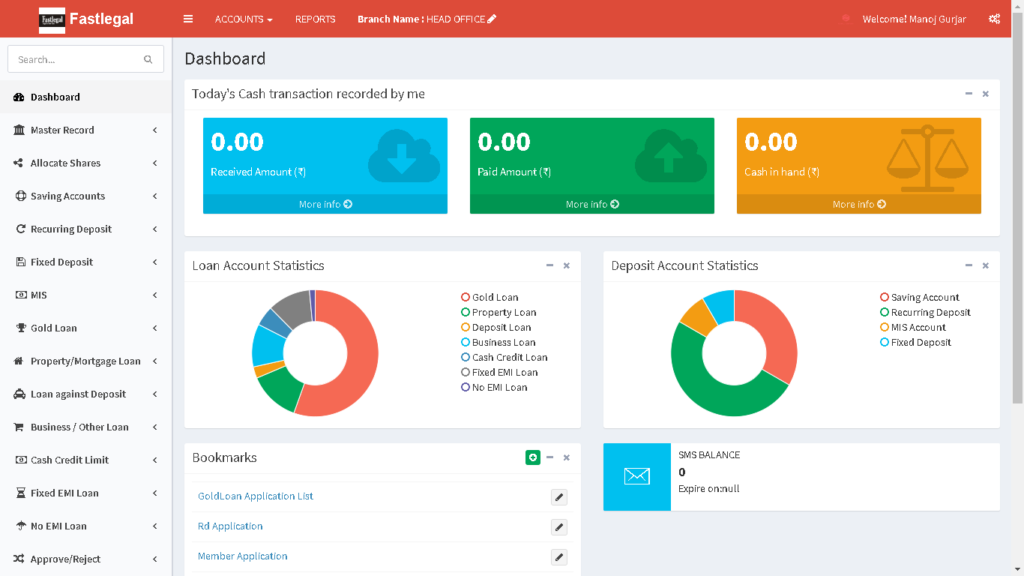
“NidhiExpert”-A web-based Nidhi Software in India for managing financial and compliance-related affairs of Nidhi Companies. “NidhiExpert” was launched around 2 years ago and more than 400+Nidhi Companies are using this software for managing their Nidhi Companies satisfactorily. Some important features of the software are listed below:-
Why “Nidhiexpert” is Best Nidhi Software in India
Cloud Ready
Get set ready Go! Start on-boarding new customers in 12hrs.
Secure loan & deposit management Software to keep your data Safe.Your data is Secure
No Need of Pre-printed StationaryMembership Form, Loan and Deposit Application Form, FD/RD Bond, Loan and Deposit Account Statements. Store Documents & CasesStore as many Documents and case details as you want. Accounting, Tax, P&L and Auditing friendlyManage & Customize all your Accounting operations on the same Software. Mobile Ready SolutionsEasily access and manage all your data from the Mobile. |
Other Features of NidhiExpert – Nidhi Software
- Opening of Branch wise Deposit & Loan Accounts.
- Branch-Wise Report of Loan and Deposit Accounts.
- Date Wise Collection Report of Branches.
- Date Wise Disbursement Report of Branches.
- Create an Unlimited User.
- Manage User Rights.
- Activation/De-activation of User Account.
- Set Timings for Users to access the Software
- Gold/Jewellery Loan
- Loan Against Deposit
- Property/Mortgage Loan
- Fixed EMI Loan
- Cash Credit Limit
Manage Multiple Deposit TypesPrint System Generated Forms, Receipts and Agreements
Statutory Compliance as per Companies Act & Nidhi Rules,2014
- Saving Account
- Fixed Deposit Account
- RD Account
- MIS Account
- Deposit Account Application Form(Saving,RD,FD & MIS)
- Loan Account Application Form (For All Loan Types)
- Membership Application Form
- Cash/Bank Receipts
- Share Certificates and Share Transfer Form
- Loan Agreement
- Auto Generated Share Folio Number
- List of Shareholders
- Details of Share Transfer
- Form NDH-3 & NDH-1
- Calculate amount of unencumbered deposit
- Statutory Compliance Calendar
Customer Login and Fund Transfer
SMS to Account Holders
System Generated Ledgers and Voucher Entry
- Create Customer Login ID & Password
- Customer can login and check their statements & dues
- Intra-Nidhi Fund Transfer
- OTP based authentication for Transfer of Funds
- Auto SMS on Account Opening, Deposit and Withdrawal of Amount with updated balance
- Fully Customize the message content
- Manage member wise message sending
- System generated vouchers for financial transactions
- Auto voucher entry for financial transactions
- Trial Balance
- Profit and Loss Account
- Balance Sheet
Ledger Creation and Voucher Entry
- Ledger Groups
- Create Ledgers
- Post Voucher entry
- Complete Accounting Solution
Request a Demo-Whatsapp or Call At +91-96641-46595
FDI in Cash & Carry Wholesale Trading/Wholesale Trading in India
FDI in Wholesale Trading is allowed 100% under Automatic Route Subject to some Conditions.
Meaning of Wholesale Trading/ Cash and Carry Wholesale Trading
Cash & Carry Wholesale trading/Wholesale trading, would mean sale of goods/merchandise to retailers, industrial, commercial, institutional or other professional business users or to other wholesalers and related subordinated service providers. Wholesale trading would, accordingly, imply sales for the purpose of trade, business and profession, as opposed to sales for the purpose of personal consumption. The yardstick to determine whether the sale is wholesale or not would be the type of customers to whom the sale is made and not the size and volume of sales. Wholesale trading would include resale, processing and thereafter sale, bulk imports with ex-port/ex-bonded warehouse business sales and B2B e-Commerce
2. Guidelines for Cash & Carry Wholesale Trading/Wholesale Trading (WT)
(a) For undertaking WT, requisite licenses/registration/ permits, as specified under the relevant Acts/Regulations/Rules/Orders of the State Government/Government Body/Government Authority/Local Self-Government Body under that State Government should be obtained.
(b) Except in case of sales to Government, sales made by the wholesaler would be considered as ‘cash & carry wholesale trading/wholesale trading’ with valid business customers, only when WT are made to the following entities:
(I) Entities holding sales tax/ VAT registration/service tax/excise duty registration; or
(II) Entities holding trade licenses i.e. a license/registration certificate/membership certificate/registration under Shops and Establishment Act, issued by a Government Authority/Government Body/Local Self-Government Authority, reflecting that the entity/person holding the license/ registration certificate/ membership certificate, as the case may be, is itself/ himself/herself engaged in a business involving commercial activity; or
(III) Entities holding permits/license etc. for undertaking retail trade (like tehbazari and similar license for hawkers) from Government Authorities/Local Self Government Bodies; or
(IV) Institutions having certificate of incorporation or registration as a society or registration as public trust for their self consumption.
Note: An entity, to whom WT is made, may fulfill any one of the 4 conditions
(c) Full records indicating all the details of such sales like name of entity, kind of entity, registration/license/permit etc. number, amount of sale etc. should be maintained on a day to day basis.
(d) WT of goods would be permitted among companies of the same group. However, such WT to group companies taken together should not exceed 25% of the total turnover of the wholesale venture.
(e) WT can be undertaken as per normal business practice, including extending credit facilities subject to applicable regulations.
(f) A wholesale/cash & carry trader can undertake retail trading, subject to the conditions as applicable. An entity undertaking wholesale/cash and carry as well as retail business will be mandated to maintain separate books of accounts for these two arms of the business and duly audited by the statutory auditors. Conditions of the FDI policy for wholesale/cash and carry business and for retail business have to be separately complied with by the respective business arms.
List of Information and Documents required for Startup Registration
If you are planning to register your company as startup in India, you need to provide information and documents for your startup at statupindia.gov.in once you signup for registration. Startup recognisation provides benefits to entities, including benifits for IP registrations etc.

Following information and documents required for Startup India registration :
- Name of Company
- Name of Startup
- Website address of Company
- Name , age qualification of Directors and Promoter / Authorized Representative
- Current Number of Employees including Founders
- Trademark or other IP details
- Is the startup creating an innovative product / service / process or improving an existing product / service / process ?
- Is the startup creating a scalable business model with high potential of employment generation or wealth creation ?
- Brief note supporting the options chosen above for innovation, improvement and scalability
- Has your startup received any funding?
- Any awards/recognition received by the entity , if yes , provide document in support
- What is the problem the startup is solving ? 150 to 200 words minimum
- How does your startup propose to solve this problem? 150 to 200 words minimum
- What is the uniqueness of your solution ? 150 to 200 words minimum
15.How does your startup generate revenue? 150 to 200 words minimum - App Link /Pitch Deck etc if any
- COI , MOA and AOA of Company
- PAN of Company
MSME Return to MCA/ROC
In the recent amendment the Ministry of Micro small and Medium enterprises prescribed Half Yearly Reporting to MCA by Companies
which receives services or goods from micro or small enterprises and whose payments to micro and small enterprises suppliers exceed 45 days
Every company shall file in MSME Form I details of all outstanding dues to Micro or small enterprises suppliers existing on the date of notification of this order within thirty days from the date of publication of this notification – Means the Due date for First Return is 21st Feb, 2019
Everycompany shall file a return as per MSME Form I annexed to this Order, by 31st October for the period from April to September and by 30th April for the period from October to March.
Form Required to be Filed to MCA/ROC:-
MSME Form I
Information required to be Filed in MSME Form I:-
Initial return of outstanding dues to Micro or Small Enterprises Suppliers
Total outstanding amount due as on date of notification of this order
Particulars of the name of suppliers and amount of payments due :-
- Financial Years/Particulars
- Name of Suppliers
- PAN of Suppliers
- Amount Due
- Specify the date from which amount is due
REGULAR RETURN OF OUTSTANDING DUES TO MICRO AND SMALL ENTERPIRSES
Total outstanding amount during April to September
Particulars of the name of suppliers and amount of payments due :-
- Financial Years/Particulars
- Name of Suppliers
- PAN of Suppliers
- Amount Due
- Specify the date from which amount is due
Total outstanding amount during October to March
- Financial Years/Particulars
- Name of Suppliers
- PAN of Suppliers
- Amount Due
- Specify the date from which amount is due
Reasons for Delay in amount of payments due
The Form is required to be Digitally Signed by Director/CEO/Manager/Company Secretary of the Company
Recovery of dues by MSME’s through MSME Samadhan Scheme
Any MSME unit which has supplied goods or render any services to any Company or any other person (buyer of goods or recipient of Services ) and the buyer or recipent is delaying in payment or not making due payment as agreed , can make an application for recovery of dues by MSME under MSME Samadhan Scheme.
Where any Micro or small enterprises supplies any goods or render any services to any buyer, the buyer shall make payment therefor on or before the date agreed upon between him and the supplier. Period of payment between the supplier and the buyer in writing shall not exceed forty five days upon from the day of acceptance
Where the buyer fails to make payment to supplier within forty five days the buyer shall be liable to pay the amount with interest thereon.

Who can apply under for Recovery of dues by MSME:
Any Micro or small enterprises having valid Udyog Aadhar/Udhyam Registration (UAM) can make Application for recorvery of dues from Debtors.
How much Amount MSME unit can claim Recovery of dues by MSME under MSME Samadhan Scheme :
The buyer is liable to pay bill amount and compound interest with the monthly rests to the supplier. Interest is calculated on the amount at the three times of the bank rate notified by RBI.
Filing of Application under MSME Samadhan Scheme
MSME units are required to file Application under Msme Samadhan Portal online with all the supporting documents including Invoices, purchase orders etc.
Examination of Application by MSME department
MSME department will examine application filed by MSME unit and if application is complete in all respact than department will issue directions to the buyer unit for payment of due amount along with interest as per the provisions under the MSMED Act 2006.
Appeal by Appellant :
If the Appellant (not being the supplier) wants to file an appeal, no application for setting aside any decree or award by the state council shall be entertained by any court unless the appellant (not being supplier) has deposited with it, the 75% of the award amount.
Bank Account Opening Resolution Draft
CERTIFIED TRUE COPY OF THE RESOLUTION PASSED AT THE MEETING OF THE BOARD OF DIRECTORS OF _______________________________ LIMITED ON Monday , THE 23rd DAY OF may , 2022 AT THE REGISTERED OFFICE OF THE COMPANY AT _______________________________________________________ IN, AT 11.00 A.M.
OPENING OF COMPANY’S BANK ACCOUNT WITH BANK, BRANCH NAME:[ NAME OF BANK]
The Chairman explained the need for opening of bank account of the Company with Bank [NAME OF BANK], Branch Address: [BANK BRANCH ADDRESS] . The Board discussed the need to open the Bank Account for operational convenience and passed the following resolution unanimously:
“RESOLVED THAT a current account in the name and style of “
[NAME OF COMPANY] ” for the company be opened with the : [BANK BRANCH ADDRESS] and the said bank be and is hereby authorized to honour all cheques, bills of exchange, promissory notes, and other negotiable instruments, letter of credit application forms, request letter for issuance of guarantee, instructions for negotiation/purchase/discounting of export and inland bills, request letters for booking of forward contracts in foreign currency for payment drawn, accepted or endorsed signed or made on behalf of the Company by the directors/authorized signatories to the extent of the limits mentioned against their name, acting singly or jointly and to act on any instructions so given by them relating to the transactions of the Company or their duly constituted attorney / nominee, whether such account be in credit or overdrawn:
RESOLVED FURTHER THAT the bank is hereby requested to provide BESTBALA NIDHI LIMITED the following services:
- Corporate Internet Banking
- Phone Banking
- Debit/ATM Card Services
- Any other services requested by the Company in writing (Incl. E-mail) and agreed by the Bank;
The below mentioned shall act as Authorized Signatory of the Company;
| Name | Designation | Limit |
| _____________________________ | Director/Authorized Signatory | Without any limits |
RESOLVED FURTHER THAT the bank be requested to hand over the related Corporate Internet Banking ID(s) and Password(s) to any of the above mentioned directors to view the said account, interalia against the terms and conditions for Corporate Internet Banking issued by the Bank from time to time. The related Internet Banking ID(s) and Password(s) will be mailed/ couriered to the address provided by the account holder and recorded with the Bank;
RESOLVED FURTHER THAT this resolution shall remain in force until notice in writing of its withdrawal or cancellation is given to the Bank by the Company;
RESOLVED FURTHER THAT the Directors be and are hereby authorized to issue a copy of this resolution certified to be a true copy be furnished to the said bank for their records and to act thereupon.”
Certified True Copy
For [ NAME OF COMPANY]__________________________________
| Director | Director | Director |
Date:
SPECIMEN SIGNATURES OF DIRECTORS/AUTHORIZED SIGNATORIES
| Name | Specimen Signature |
| BALESWAR PATRA |
Step-by-Step Guide: Filing Form 3 LLP Agreement with ROC
Limited Liability Partnerships (LLPs) offer the benefits of limited liability to their partners and are required to comply with various regulatory filings. One such compliance is the filing of Form 3, which pertains to the LLP Agreement. Here’s your step-by-step guide to understanding and filing Form 3 LLP Agreement with the Registrar of Companies (ROC).
Understanding LLP Form 3
LLP Form 3 is a document that provides details about the LLP Agreement, which governs the mutual rights and duties of the partners and the rights and duties in relation to that LLP.
Components of an LLP Agreement Typically Include:
- Name of LLP
- Name of partners and designated partners
- Form of contribution
- Profit-sharing ratio
- Rights & duties of partners
- Rules for governing the LLP
- Dispute resolution mechanism
- Indemnity clause
Filing Form 3: LLP Agreement with ROC
Step 1: Draft the LLP Agreement
- Consult a legal expert to draft the LLP Agreement to ensure it complies with the LLP Act, 2008.
- The agreement should be printed on Stamp Paper of a requisite value, which varies from state to state.
Step 2: Obtain Digital Signatures
- Every designated partner must have a Digital Signature Certificate (DSC) because the filing process is online.
Step 3: Log in to the MCA Portal
- Access the Ministry of Corporate Affairs (MCA) portal: http://www.mca.gov.in.
- If you’re a new user, you need to create an account. Existing users can log in using their credentials.
Step 4: Fill Out Form 3
- Navigate to the ‘LLP Forms’ section under the ‘MCA Services’ tab.
- Download Form 3 from the LLP Forms section.
- Fill in the necessary details as per the LLP Agreement, such as
- Date of Agreement
- Details of LLP and obligation of partners
Step 5: Attach Required Documents
- The LLP Agreement must be attached as a pdf document.
- Ensure that you have all Annexures and schedules to the agreement ready to be attached.
Step 6: Verify and Digitally Sign the Form
- The form must be digitally signed by a designated partner.
- A practicing professional (Chartered Accountant, Company Secretary, Cost Accountant, or Lawyer) must certify the form.
Step 7: Pay the Filing Fees
- Filing fees for Form 3 will depend on the total contribution of partners in the LLP.
- You can find the applicable fee structure on the MCA portal.
Step 8: Submit Form 3
- Once the payment is made, you can submit the Form 3 on the portal.
- A Service Request Number (SRN) will be generated after submission, which can be used to track the form.
Step 9: Keep Track of the Filing Status
- Check the status of your Form 3 filing using the SRN on the MCA portal.
- It usually takes around 7-10 working days for the ROC to process and approve the Form 3.
Step 10: Receipt of Form 3 Registration
- After approval, the ROC will register the LLP Agreement and a registration certificate for Form 3 will be issued.
- The certificate is a conclusive proof of registration of the LLP Agreement.
After your Form 3 has been successfully filed and registered, ensure to comply with further statutory filings as required under the LLP Act, like the annual return in Form 11 and the Statement of Accounts in Form 8.
Always consult with a corporate lawyer for accurate and legal advice tailored to your specific circumstances. This general guide is informative but does not account for every possible scenario or change in law over time.
Top UPI payment apps in India
In this article we will discuss about the top UPI payment apps in India, up enables easier and faster transfer using mobile applications, UPI handle or username is required for receiving and sending funds in bank account.
Due of it’s easy to operate user interface, UPI system has grown significantly in last 2-3 years and many people and business started accepting payments via UPI. As the increasing uses of UPI the fintech applications that facilitates payments system via UPI has got major competation which has leads to better customer service and quick adoption of UPI payment system in India.
List of top UPI payment apps in India
Phonepe
Phonepe is an UPI payment app grown significantly is among the top UPI apps in India,

Google pay
Backed by Google , Google pay got significant presence in UPI payment services in India, Google pay is among the first choice of users.

Paytm UPI
Paytm is first and grown significantly and has major market share amoung the UPI payment services

Bhim App
Bhim is first UPI payment app and backed by National payment Corporation of India, the first UPI payment system app launched by PM Modi. Bhim has done lot of improvements in its UI and added other features to its portfolio and able to get good response from market even today where other market players are heavily spending lots of money on advertising.